Ever wondered why some optical lenses made by THY Precision injection molding optical lenses don’t meet quality standards? As the need for precise LED lighting parts grows, knowing how to fix common issues in the injection molding optical lenses process step by step is key. Each step, from picking materials to designing the mold, affects the lens’s quality and consistency. We’ll look into the injection molding optical lenses process step by step and share ways to solve common problems in making optical lenses.
Key Takeaways
- Understand the critical steps in the injection molding optical lenses process step by step for optical lenses
- Identify common defects in injection-molded optical lenses, such as shrinkage, warpage, flow lines, and weld lines
- Learn how to optimize injection molding optical lensesg parameters, including temperature control, pressure, and speed
- Explore advanced techniques like multi-component molding and in-mold assembly for enhanced lens production
- Discover strategies to troubleshoot and address issues in the injection molding optical lenses process step by step for optical lenses
Understandingtheinjectionmoulding process step by step
The injection molding optical lensesg process for making optical lenses is complex and precise. It involves several key steps. Each step is important for making high-quality, durable, and visually stunning lenses. From picking the right materials to designing the mold, every step is crucial.
Material Selection and Preparation
Choosing the right lens material is key. Options include PMMA (acrylic) or PC (polycarbonate). These choices affect how the plastic flows and its final quality. It’s important to dry the material and control its temperature. This ensures the lenses have the right optical properties and size.
Mold Design and Fabrication
The design and making of the mold are vital for injection molding. They help control how the molten plastic flows and shape the lenses. Precision engineering and advanced techniques are used to make molds. These molds can handle the demands of industrial production methods and produce many lenses consistently.
Knowing the injection molding process step by step helps manufacturers. They can make better products, improve quality, and meet the growing need for high-performance lenses. This is important in many industries, like consumer electronics and medical devices.
Common defects in injection molding optical lenses
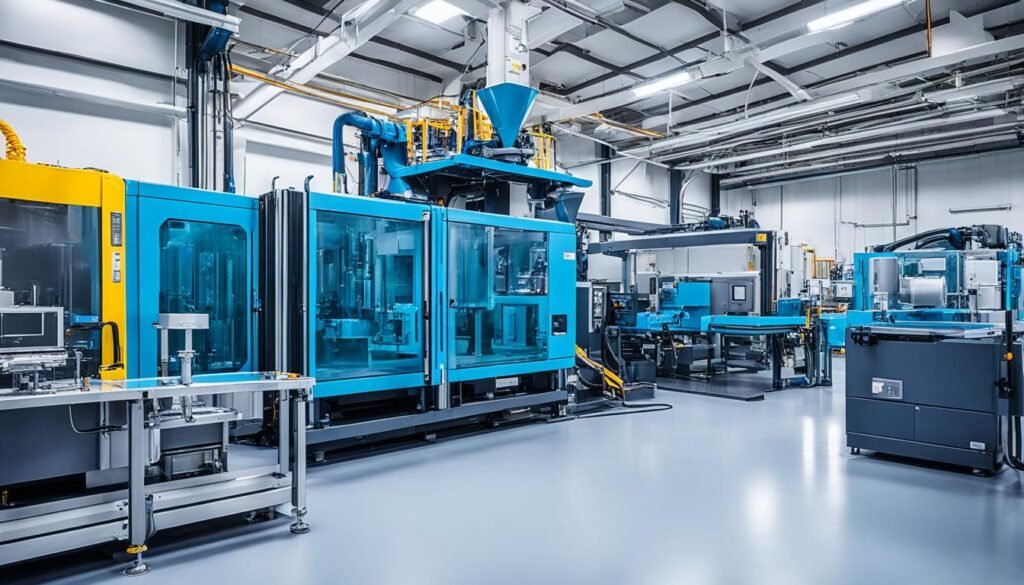
The injection molding process step by step is key for making top-notch optical lenses. Even with precise plastic injection molding and the latest molding machine operation, defects can still happen. It’s vital to know these issues to improve the mold design and the molten plastic injection, cooling and ejection steps.
Shrinkage and Warpage
Shrinkage and warpage are big problems in injection molded optical lenses. They come from things like uneven walls, wrong material temperature, bad mold temperature, or not enough cooling time. To fix this, it’s important to control these manufacturing techniques and industrial production methods. This helps keep the lenses the right size and shape for their use.
Flow Lines and Weld Lines
Flow lines and weld lines are also common issues in plastic injection molding for lenses. They’re often caused by temperature differences in the injection process or the gate’s shape and size. These lines can mess up how the lens works and looks, which is key for its precision engineering and mass production processes. To fix this, the mold design and injection settings need to be just right.
Fixing these injection molded optical lens problems is crucial for quality control and meeting the optical industry’s high standards. By finding and solving these issues, THY Precision can make lenses that really perform well for its customers.
Optimizing injection molding optical lenses parameters
The injection molding process is key for making high-quality optical lenses. It’s important to control the temperature, pressure, and speed. This ensures the lenses are top-notch.
Temperature Control
Keeping the right temperature is vital in injection molding. The temperature of the material, the mold, and cooling time affect the lens quality. The right temperature range helps avoid shrinkage and warpage, keeping the lenses clear and precise.
Pressure and Speed
Controlling the injection pressure and speed is also crucial. Too much pressure can cause flow lines and air marks. Adjusting these based on the lens design and material makes the molding process better. This improves the lenses’ performance and look.
| Parameter | Optimal Range | Impact on Lens Quality |
|---|---|---|
| Material Temperature | 180-220°C | Affects viscosity, flow, and part dimensional accuracy |
| Mold Temperature | 40-80°C | Influences cooling rate, residual stresses, and part warpage |
| Injection Pressure | 500-1500 psi | Determines fill pattern, weld line quality, and part strength |
| Injection Speed | 20-100 mm/s | Affects flow pattern, weld line formation, and surface finish |
By controlling temperature, pressure, and speed, manufacturers can make high-quality optical lenses. These lenses meet the industry’s strict standards.
Advanced techniques for injection molding optical lenses
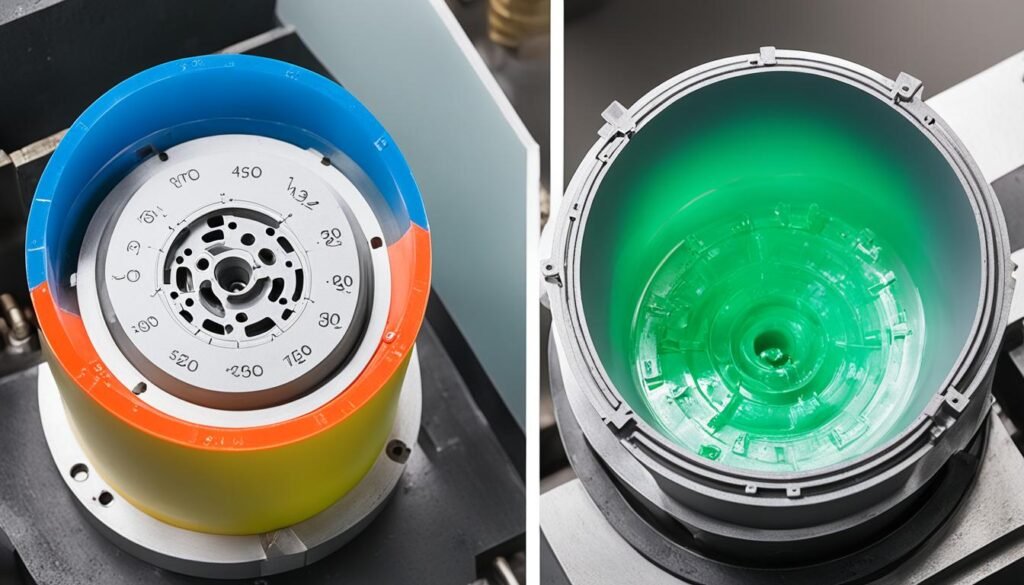
In the world of plastic injection molding, makers are always looking for new ways to improve their products. They’re using advanced methods like multi-component molding and in-mold assembly. These new ways are changing how injection molding process step by step makes precise optical lenses.
Multi-component Molding
Multi-component plastic injection molding lets makers put different materials together in one lens. This method makes complex and custom optical designs possible. It combines materials with different properties, like polymers with special refractive indexes or electronics, in molding machine operation and mold design.
In-mold Assembly
In-mold assembly is a new way to make injection-molded optical lenses. It adds things like LED chips or electronics during the molten plastic injection and cooling and ejection steps. This makes products work better and improves manufacturing techniques, industrial production methods, and mass production processes.
These new precision engineering methods show how plastic injection molding can make top-quality optical lenses. As makers keep innovating, the future of injection-molded lenses looks bright and full of new technology.
Conclusion
The injection molding process step by step is key for making high-quality optical lenses. These lenses are used in LED lighting and more. By understanding plastic injection molding, getting the molding machine operation right, and designing the mold well, THY Precision makes lenses that meet today’s lighting and optical needs.
THY Precision uses careful cooling and ejection steps and advanced manufacturing techniques. This helps them solve problems like shrinkage and flow lines. Their lenses look great and work well because of this.
THY Precision is leading the way in making high-quality, affordable optical solutions. They keep innovating with their injection molding process step by step products. With a focus on quality and deep knowledge of plastic injection molding, they’re set to lead in optical lens manufacturing for the future.